Monday - Friday 07:30 - 17:30, Saturday 07:30 - 16:00
Herringbone Parquet Floor Sanding in Notting Hill
Back to Portfolio
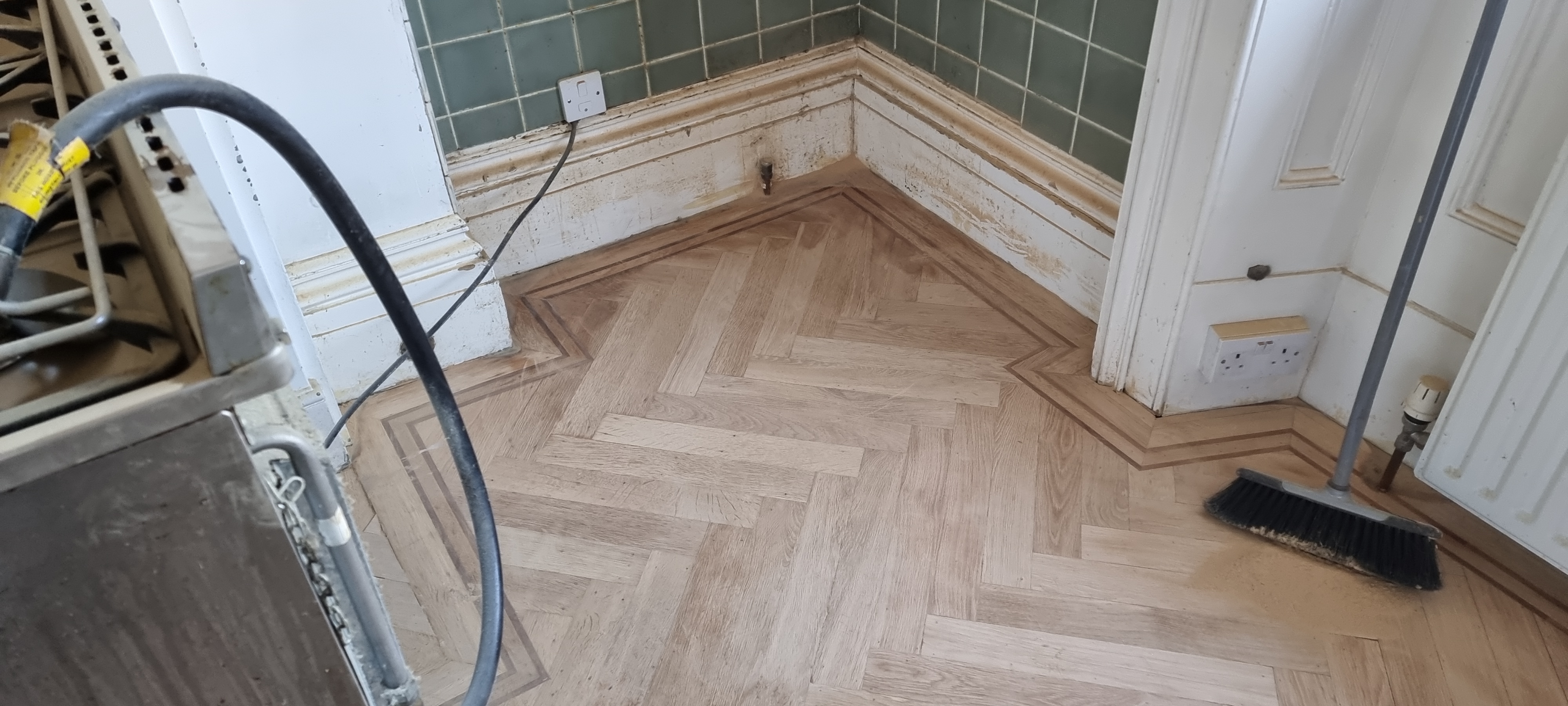
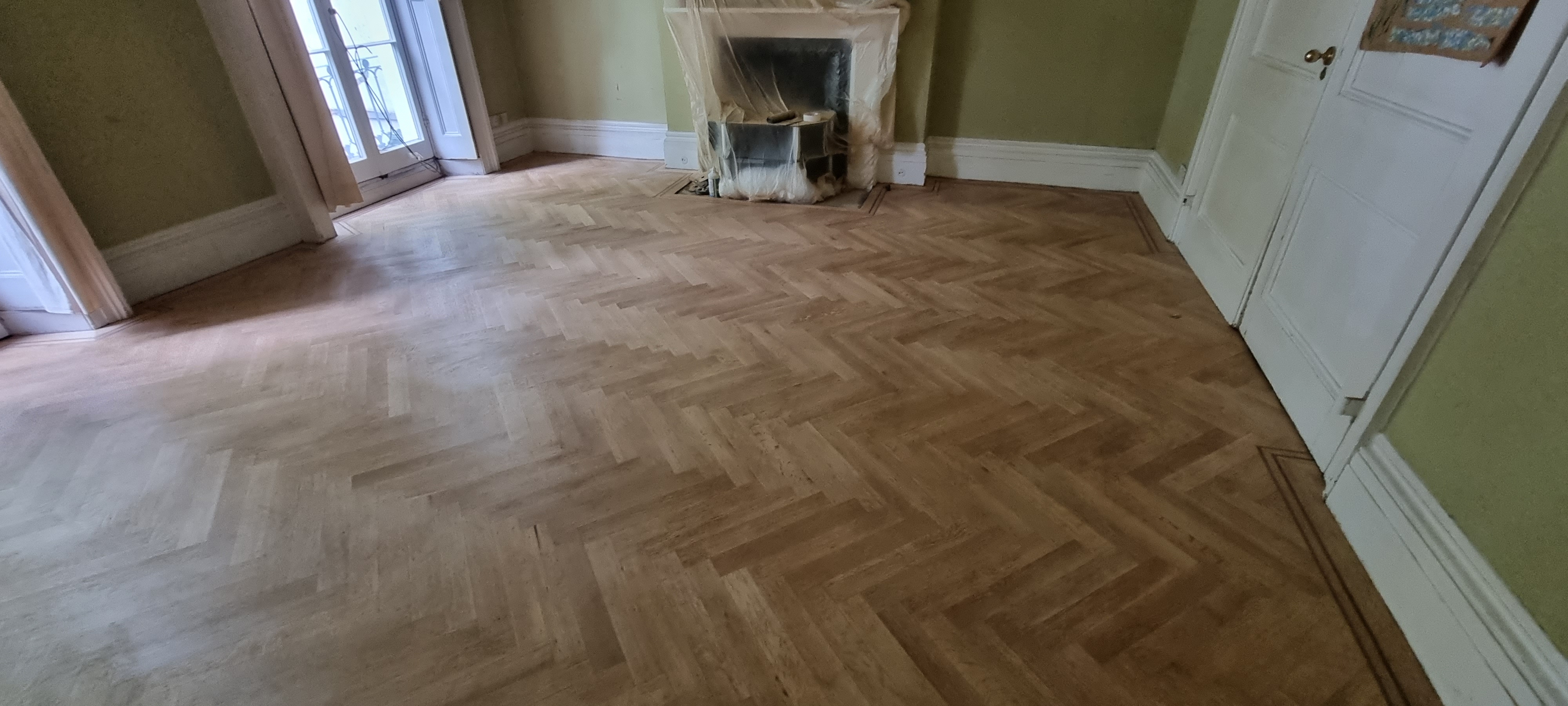
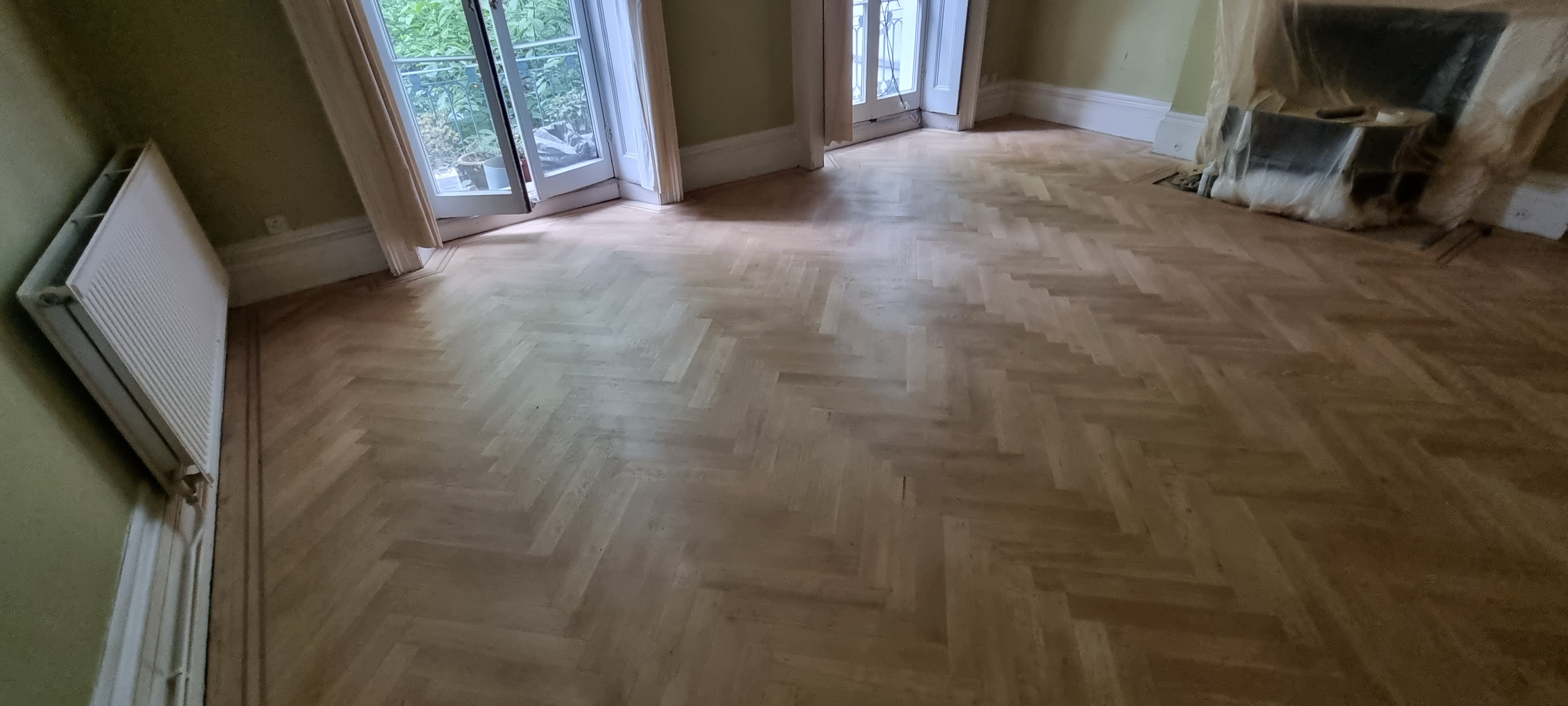
Herringbone Parquet Floor Sanding in Notting Hill
We recently completed sanding and finishing work on a herringbone parquet floor in a period property in Notting Hill. The floor had lost its lustre over decades of use, with patchy varnish and surface scratches obscuring the quality of the timber beneath. Our team brought it back to life using traditional sanding techniques combined with modern dust extraction, restoring the geometric pattern and natural grain that makes parquet flooring such a worthwhile investment.
Work carried out
- Full floor sanding using progressive grit progression, 40 through to 120
- Edge sanding and hand scraping of corners and mouldings
- Dust-free sanding with HEPA filtration throughout
- Repair of minor gaps and lifting blocks
- Two coat polyurethane finish, satin sheen
- Final buffing and inspection
About the project
This Notting Hill property dates from the 1880s, and the herringbone parquet was likely laid during the early twentieth century. The blocks had settled unevenly in places, creating slight undulations across the surface. The previous finish was a thick, yellowed polyurethane that had become cloudy and worn through in the high traffic areas between rooms. The owner wanted the floor restored without completely replacing it, as the timber quality and the original layout were worth preserving.
We began with a thorough assessment to check for any structural movement or loose blocks. Three blocks needed reglueing before sanding could begin safely. We then sanded the entire floor using a large floor sander for the main area, moving through grits 40, 80, and 120 to remove the old finish and level the surface without excessive timber loss. Working with herringbone requires care at the transitions between block directions, where the grain can splinter if pressure isn't managed correctly. Our team used hand scraping for the perimeter and around the fireplace, where the machine sander couldn't reach. A HEPA filtered dust extraction system ran throughout the process, keeping the house clean and protecting our operatives from fine dust inhalation. Once the surface was fully prepared, we applied two coats of polyurethane with a day's drying time between coats, then buffed the finish to an even, satin appearance.
About our Notting Hill service
Notting Hill contains a mix of Victorian and Edwardian terraces, each with its own quirks and qualities. Many properties have original parquet, engineered oak, or solid wood flooring laid over the decades. We work regularly across the area on restoration projects like this one, as well as new sanding jobs on recently purchased properties undergoing refurbishment. The density of period properties means we encounter a range of timber types and original finishes, from wax and French polish through to modern varnishes. Each requires a different approach, and there's rarely a one-size-fits-all solution.
The character of Notting Hill properties often extends to their floors. We've sanded everything from original Victorian pine boards to contemporary installations in new-build apartments. Many clients in the area are renovating period homes and want their original wooden floors restored rather than replaced. Others are installing new engineered or solid wood and need expert finishing to match existing floors elsewhere in the property. We're familiar with the challenges of working in listed or period properties, where care with original joinery and finishes is essential.
Frequently asked questions
How much does floor sanding cost per square metre?
Sanding rates typically fall between £25 and £45 per square metre, depending on the condition of the floor, the timber type, and what finish you're applying. A floor that's in poor condition with heavy scratching or uneven surfaces may fall toward the higher end. If you're simply refreshing a well-maintained floor, you'll be closer to the lower end. We provide a detailed quote after viewing the property.
How long does sanding take?
Most residential floors take 2 to 5 days to sand and finish, depending on size and condition. A typical lounge and hallway might take 3 days from sanding through to final coat. Drying time between coats means you'll need to keep the room empty for at least 24 hours between applications. We'll give you a realistic timeline once we've assessed the work required.
Is sanding a dusty process?
Modern sanding equipment with HEPA filtration removes the vast majority of dust during the work itself. We use extraction systems on both the floor sander and hand tools, and the dust is captured and contained rather than released into your home. You'll still notice some fine dust settling during and after the process, but it's a fraction of what older sanding methods produced.
Project Gallery